Introduction
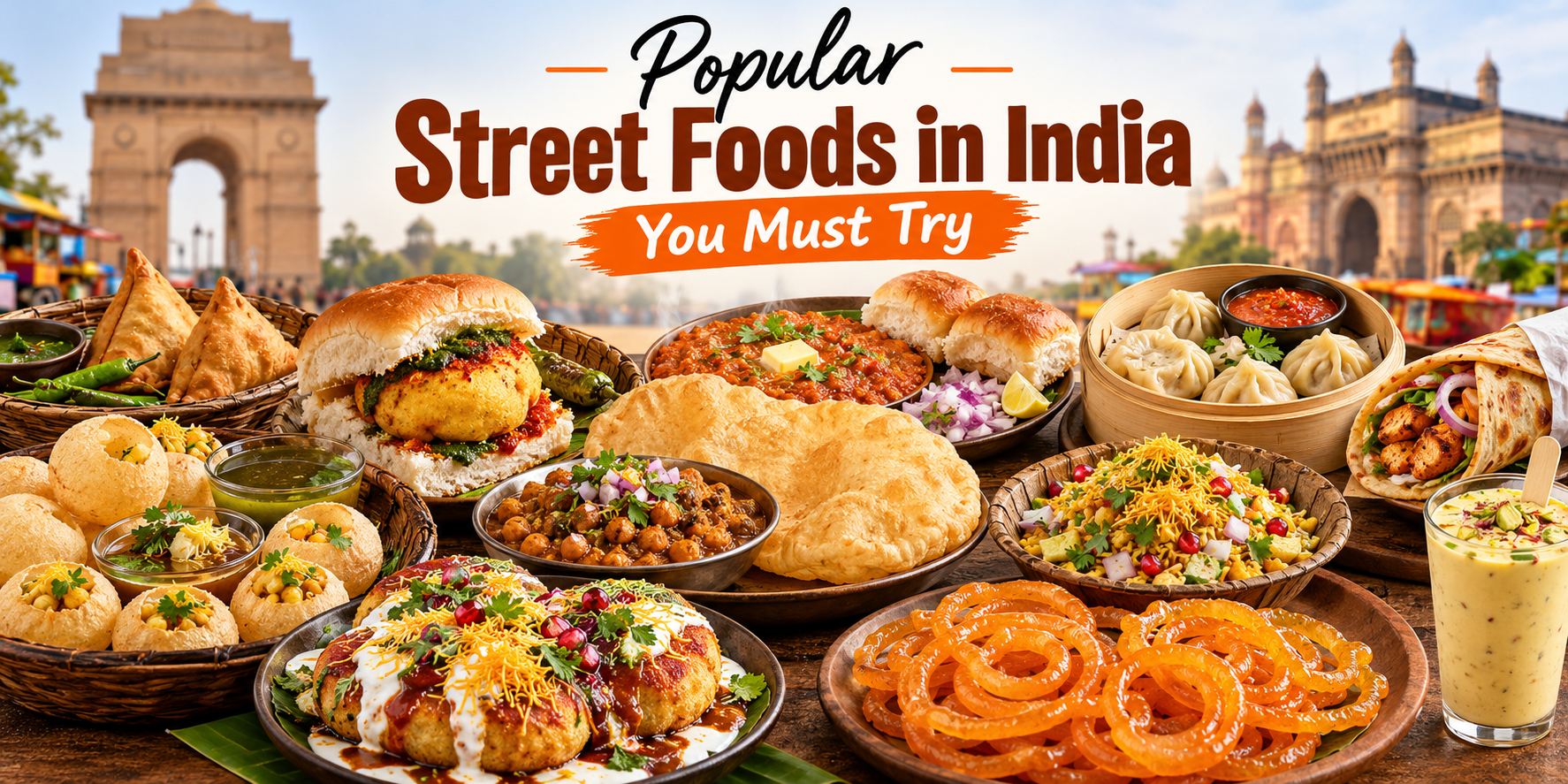
India is a paradise for food lovers, especially those who enjoy exploring vibrant street food markets. From spicy chaats and crispy fried snacks to flavourful rolls, steaming momos, and delicious regional sweets, Indian street food offers an incredible variety of tastes, textures, and aromas. Every city has its own specialities, influenced by local traditions, ingredients, and cooking styles.
The popular street foods in India are more than just quick snacks. They reflect the country’s rich culinary heritage and the creativity of local vendors who have perfected their recipes over generations. Whether you are wandering through the busy lanes of Old Delhi, exploring Mumbai’s lively food stalls, or discovering Kolkata’s iconic street-side delicacies, there is always something delicious to try.
In this guide, we explore 20 famous Indian street foods, their origins or regional associations, what makes them special, and where you can experience their distinctive flavours.
20 Popular Street Foods in India You Must Try
1. Pani Puri – India’s Favourite Tangy Snack

Pani puri is one of the most loved Indian street food snacks, known for its combination of crispy puris, spicy flavoured water, tangy tamarind chutney, potatoes, and chickpeas. Each bite delivers a delicious mix of sweet, sour, spicy, and crunchy flavours.
This popular snack is known by different names across India. It is commonly called golgappa in Delhi and parts of North India, while phuchka is the familiar name in Kolkata. Regional variations use different fillings, spices, and water preparations, giving each version its own character.
Pani puri is especially popular during evening outings, family gatherings, and casual food walks.
Where to try it: Delhi, Mumbai, Kolkata, Lucknow, and Ahmedabad.
2. Vada Pav – Mumbai’s Iconic Street Food

Vada pav is one of Mumbai’s most recognisable street foods. It consists of a spiced potato fritter coated in gram flour batter, deep-fried until golden, and served inside a soft pav bun with chutneys.
The combination of spicy garlic chutney, green chutney, and a crispy vada creates a satisfying snack that is both affordable and convenient. It is popular among office workers, students, commuters, and visitors exploring the city.
Vada pav is often described as Mumbai’s answer to a quick burger, although its flavours and preparation are distinctly Indian.
Where to try it: Mumbai, Thane, Pune, and other parts of Maharashtra.
3. Chole Bhature – A Hearty North Indian Favourite

Chole bhature is a popular North Indian dish featuring spicy chickpea curry served with large, fluffy, deep-fried bread called bhature. The curry is prepared with a blend of aromatic spices, tomatoes, onions, and other ingredients that give it a rich flavour.
Although it is often enjoyed as a filling breakfast or brunch, chole bhature is also a favourite lunch option. Many local eateries serve it with pickled onions, green chillies, and tangy accompaniments.
Its bold spices and generous portions make it a must-try for anyone exploring North Indian food culture.
Where to try it: Delhi, Amritsar, Chandigarh, and Ludhiana.
4. Aloo Tikki – Crispy Potato Patties

Aloo tikki is a beloved Indian snack made from seasoned mashed potatoes shaped into patties and shallow-fried or pan-fried until crisp on the outside and soft inside.
In many parts of North India, aloo tikki is served as chaat with yoghurt, tamarind chutney, mint chutney, chickpeas, and crunchy sev. Some versions are stuffed with peas or lentils for additional flavour.
The balance of crispy potatoes, cooling yoghurt, sweet chutney, and spicy seasoning makes aloo tikki one of the most appealing traditional Indian street food dishes.
Where to try it: Delhi, Lucknow, Kanpur, and Jaipur.
5. Pav Bhaji – Mumbai’s Delicious Vegetable Mash

Pav bhaji is a famous Mumbai street food consisting of a spicy mashed vegetable preparation served with butter-toasted pav bread. The bhaji commonly includes potatoes, peas, tomatoes, cauliflower, and other vegetables cooked with a distinctive spice blend.
The vegetables are mashed together on a hot cooking surface, allowing the spices and ingredients to combine into a rich, flavourful dish. It is typically served with chopped onions, coriander, and a wedge of lemon.
Pav bhaji is a popular choice for evening snacks and casual dinners. Its bold flavour and comforting texture have made it a favourite far beyond Maharashtra.
Where to try it: Mumbai, Pune, Nashik, and other Maharashtra cities.
6. Momos – A Favourite Street Snack Across India

Momos are dumplings with roots in Tibetan and Himalayan food traditions that have become extremely popular across India. They are typically filled with vegetables, paneer, chicken, or other ingredients and cooked by steaming or frying.
Street vendors commonly serve momos with a spicy red chilli chutney that adds heat and flavour. Fried, tandoori-style, and pan-fried variations have also become widely available.
Although momos are particularly associated with Himalayan regions and northeastern India, they are now easy to find in metropolitan areas and smaller cities throughout the country.
Where to try them: Delhi, Darjeeling, Gangtok, Guwahati, and Shimla.
7. Kathi Roll – Kolkata’s Flavourful Wrap

Kathi rolls are among Kolkata’s most famous street food creations. They feature a paratha or flatbread wrapped around fillings such as spiced grilled chicken, paneer, egg, or vegetables.
The filling is often accompanied by sliced onions, green chillies, lemon juice, and sauces. The result is a portable, flavourful meal that can be eaten on the go.
Kolkata’s roll culture has inspired many variations, including egg rolls, double-egg rolls, chicken rolls, and paneer rolls. These wraps are particularly popular among people looking for a quick and satisfying meal.
Where to try them: Kolkata, especially its busy market streets and established local food stalls.
8. Dabeli – Gujarat’s Sweet and Spicy Snack

Dabeli is a popular Gujarati snack that originated in the Kutch region. It consists of a soft pav bun filled with a spiced potato mixture, sweet and tangy chutneys, roasted peanuts, pomegranate seeds, and crunchy sev.
The combination of textures is one of dabeli’s defining characteristics. The potato filling is soft, the peanuts provide crunch, and the chutneys create a balance of sweet, sour, and spicy flavours.
Dabeli is often toasted with butter before serving, making the bread crisp on the outside while keeping the filling deliciously soft.
Where to try it: Bhuj, Kutch, Ahmedabad, and other parts of Gujarat.
9. Samosa – India’s Classic Fried Snack

The samosa is one of the most recognisable snacks in India. It is made by filling a pastry shell with spiced potatoes, peas, and sometimes other ingredients, then deep-frying it until golden and crisp.
Samosas are commonly served with mint chutney or sweet tamarind chutney. They are popular at tea stalls, markets, railway stations, bakeries, and roadside food shops.
While the samosa has historical connections to wider West and Central Asian culinary traditions, it has developed distinctive regional variations in India. Some versions are small and crisp, while others feature different fillings or local spice blends.
Where to try them: Delhi, Agra, Jaipur, Varanasi, and Lucknow.
10. Jalebi – A Sweet Street Food Classic

Jalebi is a popular Indian sweet made by piping batter into spiral shapes, frying it until crisp, and soaking it in sugar syrup. It has a distinctive appearance, a crunchy exterior, and a sweet, syrupy centre.
Jalebi is frequently enjoyed for breakfast in parts of North India and is also served as a dessert during festivals and celebrations. Some regional food shops pair it with rabri, a thickened milk dessert, for an especially indulgent treat.
Freshly prepared jalebi is particularly appealing because of its crisp texture and warm sweetness.
Where to try it: Delhi, Indore, Jaipur, Varanasi, and Haridwar.
11. Dosa – A South Indian Street Food Favourite

Dosa is a thin, savoury crepe traditionally made from a fermented batter of rice and lentils. It is a staple of South Indian cuisine and is widely available at street stalls, breakfast counters, and restaurants.
Masala dosa is filled with a seasoned potato mixture and is commonly served with coconut chutney and sambar. Other variations include plain dosa, onion dosa, rava dosa, and cheese dosa.
The contrast between the crispy exterior, soft filling, and flavourful accompaniments makes dosa a versatile option for breakfast, lunch, or an evening meal.
Where to try it: Bengaluru, Chennai, Mysuru, Hyderabad, and Kochi.
12. Puchka – Kolkata’s Tangy Street Food

Phuchka, also known as Kolkata-style puchka, is a much-loved Bengali street food related to pani puri. It is usually prepared with crisp hollow shells filled with a spiced potato mixture and served with tangy, flavourful water.
Compared with some other regional versions, Kolkata-style phuchka is often noted for its distinctive tamarind-forward flavour and spiced filling.
Eating phuchka at a local market is as much a social experience as a culinary one, with vendors serving each piece fresh and adjusting the flavours to suit local preferences.
Where to try it: Kolkata and other parts of West Bengal.
13. Litti Chokha – Bihar’s Traditional Street Food

Litti chokha is a traditional dish associated with Bihar and parts of eastern Uttar Pradesh. Litti consists of wheat dough balls stuffed with roasted gram flour, commonly known as sattu, and seasoned with spices.
The litti is baked or roasted and served with chokha, a preparation made from roasted eggplant, tomatoes, potatoes, or combinations of these ingredients. Mustard oil, green chillies, garlic, and coriander often contribute to its distinctive flavour.
This hearty dish reflects the regional ingredients and cooking traditions of eastern India. It is available at local food stalls as well as dedicated restaurants.
Where to try it: Patna, Gaya, Muzaffarpur, and Varanasi.
14. Misal Pav – Maharashtra’s Spicy Delight

Misal pav is a popular Maharashtrian dish made with a spicy sprouted-legume curry, usually topped with farsan, chopped onions, coriander, and lemon juice. It is served with pav bread to balance the spicy curry.
Different regions and eateries prepare misal with varying levels of heat and different toppings. Kolhapuri-style versions are particularly known for their bold, spicy flavour.
Misal pav is commonly enjoyed as breakfast or brunch and is a great choice for visitors interested in regional Indian food.
Where to try it: Pune, Nashik, Kolhapur, and Mumbai.
15. Mirchi Bajji – A Spicy Southern Indian Snack

Mirchi bajji is a popular snack in parts of South India, particularly Telangana and Andhra Pradesh. It consists of chillies coated in seasoned gram flour batter and deep-fried until crisp.
Depending on the regional recipe, the chillies may be deseeded or stuffed before frying. Some vendors cut the fried chillies open and add onions, lemon juice, or other seasonings before serving.
The combination of a crunchy coating and a spicy filling makes mirchi bajji a favourite for people who enjoy bold flavours.
Where to try it: Hyderabad, Vijayawada, Visakhapatnam, and other cities in Andhra Pradesh and Telangana.
16. Poha – Indore’s Beloved Breakfast Food

Poha is a light, flavourful dish made from flattened rice cooked with ingredients such as onions, mustard seeds, turmeric, curry leaves, and green chillies. In Indore, it is commonly served with crunchy sev, chopped onions, coriander, and a squeeze of lemon.
Some vendors also add pomegranate seeds or a side of jalebi, creating a distinctive sweet-and-savoury breakfast combination.
Poha is popular because it is quick to prepare, easy to customise, and well suited to a morning meal.
Where to try it: Indore, Bhopal, Ujjain, and other parts of Madhya Pradesh.
17. Kachori – A Crispy and Flavourful Indian Snack

Kachori is a deep-fried pastry that comes in numerous regional varieties. Its filling may include spiced lentils, onions, peas, or other ingredients, depending on the local recipe.
Rajasthan is particularly well known for varieties such as pyaaz kachori, while other parts of North India have their own styles of stuffed kachori. The pastry is often served with chutneys, yoghurt, or a spicy potato curry.
With its crisp shell and richly seasoned filling, kachori is a popular choice for breakfast, tea-time snacks, and casual street-side meals.
Where to try it: Jaipur, Jodhpur, Kota, Agra, and Varanasi.
18. Kulfi – India’s Traditional Frozen Dessert

Kulfi is a traditional Indian frozen dessert prepared by slowly reducing and flavouring milk before freezing it in moulds. Popular flavours include malai, pistachio, mango, saffron, and cardamom.
Unlike many conventional ice creams, kulfi is generally denser and creamier because of its preparation method. Street vendors may serve it on a stick, in a small clay pot, or sliced into portions.
It is especially enjoyable during warm weather and makes a refreshing finish to a spicy street food meal.
Where to try it: Delhi, Jaipur, Lucknow, Amritsar, and Hyderabad.
19. Bhutta – Roasted Corn With Indian Spices

Bhutta, or roasted corn on the cob, is a popular seasonal street snack across India. Corn is roasted over charcoal or an open flame until its kernels develop a smoky flavour.
Vendors often rub the hot corn with lemon and a mixture of salt and chilli powder, creating a simple but flavourful snack.
Bhutta is especially popular during the monsoon season and in cooler weather when people visit parks, beaches, hill stations, and roadside markets.
Where to try it: Mumbai, Delhi, Shimla, Manali, and hill destinations across India.
20. Rabri Falooda – A Rich and Refreshing Dessert

Rabri falooda combines rich, thickened sweet milk with falooda vermicelli and other ingredients that vary by recipe. It may include basil seeds, rose syrup, nuts, or ice cream, depending on the preparation.
This dessert is popular in many North Indian cities and is especially appealing to people who enjoy creamy, chilled sweets. Its contrasting textures and aromatic flavours make it a memorable way to end a street food tour.
Where to try it: Delhi, Lucknow, Jaipur, and parts of Uttar Pradesh.
Famous Street Foods in India by City
India’s street food culture changes from one region to another. The following table is a useful starting point when planning a food-focused trip.
| City or region | Street foods to try |
|---|---|
| Delhi | Chole bhature, aloo tikki, golgappa, samosa |
| Mumbai | Vada pav, pav bhaji, bhel puri |
| Kolkata | Kathi roll, phuchka, jhal muri |
| Ahmedabad | Dabeli, khaman, sev puri |
| Indore | Poha, jalebi, bhutte ka kees |
| Lucknow | Tunday-style kebabs, basket chaat, kachori |
| Jaipur | Pyaaz kachori, mirchi vada, kulfi |
| Hyderabad | Mirchi bajji, dosa, kebabs |
| Bengaluru | Masala dosa, idli, local chaat |
| Patna | Litti chokha, samosa, chaat |
These are representative examples rather than an exhaustive list. Most cities offer many more regional specialities, and recipes can differ considerably between vendors.
Why Is Indian Street Food So Popular?
Indian street food has earned a special place in the country’s food culture for several reasons.
1. A Wide Variety of Flavours
Street food brings together sweet, spicy, tangy, sour, savoury, and smoky flavours. Dishes such as pani puri, pav bhaji, and dabeli demonstrate how a few ingredients can create a complex taste experience.
2. Regional Diversity
Each region has its own ingredients, cooking traditions, and signature dishes. From the fermented batters of South India to the stuffed pastries of Rajasthan, street food offers a way to explore India’s culinary diversity.
3. Convenient Meals and Snacks
Many street foods are quick to serve and easy to eat while travelling, shopping, or commuting. Options range from small snacks to filling meals such as chole bhature and litti chokha.
4. Traditional Cooking Techniques
Roasting, frying, steaming, fermenting, and slow-cooking are all important parts of Indian street food preparation. These techniques contribute to the distinctive textures and flavours associated with regional dishes.
5. A Social Food Experience
Street food markets are often busy gathering places where families, friends, and visitors come together. Watching a vendor prepare a dish and tasting it fresh can be an important part of exploring a city’s culture.
Tips for Enjoying Street Food Safely in India
Exploring Indian street food can be a memorable experience, but food hygiene deserves attention.
- Choose busy stalls: Vendors with a steady flow of customers may prepare food more frequently, although popularity alone does not guarantee safety.
- Check food preparation: Prefer food cooked thoroughly and served hot. Observe whether the cooking area and utensils appear clean.
- Be careful with water and ice: Choose sealed drinking water from a reliable source and avoid ice of uncertain origin.
- Check raw ingredients: Chutneys, cut fruits, raw vegetables, and uncooked garnishes require careful handling and safe washing.
- Consider your spice tolerance: Ask for less chilli if you are not accustomed to spicy food.
- Check allergies and dietary requirements: Ask about ingredients, shared cooking surfaces, and potential cross-contact if you have food allergies or dietary restrictions.
- Eat according to your comfort: If a stall’s hygiene practices seem questionable, choose another option.
Good food hygiene can reduce the risk of foodborne illness, but no street food stall can be assumed to be completely risk-free.
Frequently Asked Questions (FAQs)
1. What are the most popular street foods in India?
Some of the most popular street foods in India include pani puri, vada pav, pav bhaji, chole bhature, samosa, momos, aloo tikki, dosa, kathi rolls, and jalebi. Their popularity varies by region, with each city offering its own local favourites.
2. Which Indian city is famous for street food?
Delhi, Mumbai, Kolkata, Indore, Ahmedabad, Jaipur, and Lucknow are among the Indian cities known for their street food cultures. Delhi is famous for chaat and chole bhature, Mumbai for vada pav and pav bhaji, and Kolkata for kathi rolls and phuchka.
3. What is India’s most famous street food snack?
Pani puri, also known as golgappa or phuchka in different regions, is one of India’s most widely recognised street food snacks. Other popular choices include samosa, vada pav, aloo tikki, and momos.
4. Which Indian street foods are vegetarian?
Many Indian street foods are vegetarian, including pani puri, vada pav, aloo tikki, pav bhaji, dosa, dabeli, poha, kachori, jalebi, and kulfi. However, recipes and cooking practices vary, so check ingredients and preparation methods if you follow a strict vegetarian diet.
5. What are the best Indian street foods for tourists?
First-time visitors can try regional favourites such as chole bhature in Delhi, vada pav in Mumbai, kathi rolls in Kolkata, dabeli in Gujarat, poha in Indore, and litti chokha in Bihar. Choosing dishes associated with the destination can make a food trip more memorable.
6. Is Indian street food safe to eat?
Indian street food can be enjoyed more safely by choosing clean stalls, eating thoroughly cooked food served hot, drinking safe water, and being cautious with raw ingredients and ice. Hygiene practices vary between vendors, so it is important to assess each stall individually.
7. What is the difference between golgappa, pani puri, and phuchka?
These snacks belong to the same broad family of crisp, hollow puris filled with spiced ingredients and flavoured water. Golgappa is a common name in parts of North India, pani puri is widely used in western India and elsewhere, and phuchka is associated with Bengal and eastern India. Their shells, fillings, and flavours may differ by region.
8. Which Indian street foods are best for evening snacks?
Popular evening snacks include samosas, aloo tikki, momos, vada pav, kachori, bhutta, and pani puri. Many are available at local markets and roadside stalls, making them convenient choices for an evening food walk.
Conclusion
The popular street foods in India offer a delicious introduction to the country’s diverse culinary traditions. From the tangy flavours of pani puri and the satisfying crunch of samosas to Mumbai’s buttery pav bhaji, Kolkata’s kathi rolls, and Bihar’s traditional litti chokha, every dish tells a story about the region it comes from.
Whether you are a local food enthusiast or a traveller discovering India for the first time, trying regional street food is a wonderful way to experience local ingredients, cooking techniques, and everyday food culture.
Start with a few famous dishes, explore local specialities, and discover the flavours that make each destination unique. Remember to choose vendors carefully and pay attention to food hygiene so you can enjoy your culinary adventure with greater confidence.
Which Indian street food would you try first? Explore your local food markets, discover new regional favourites, and share your favourite street food experiences with fellow food lovers.
Leave a Reply